Hive inspection log
Queen or eggs seen, brood pattern, stores, frames of bees, mite count: a few notes at each inspection are enough to follow a colony through the season and act in time.
Hive inspection log
Printed on
Inspections
One row per hive per inspection. Filter by hive ID to see its history.
Log an inspection
No entries yet.
| Date | Hive | Apiary | Queen | Brood | Honey and pollen stores | Strength | Mite count | Actions |
|---|
How it works
What to record
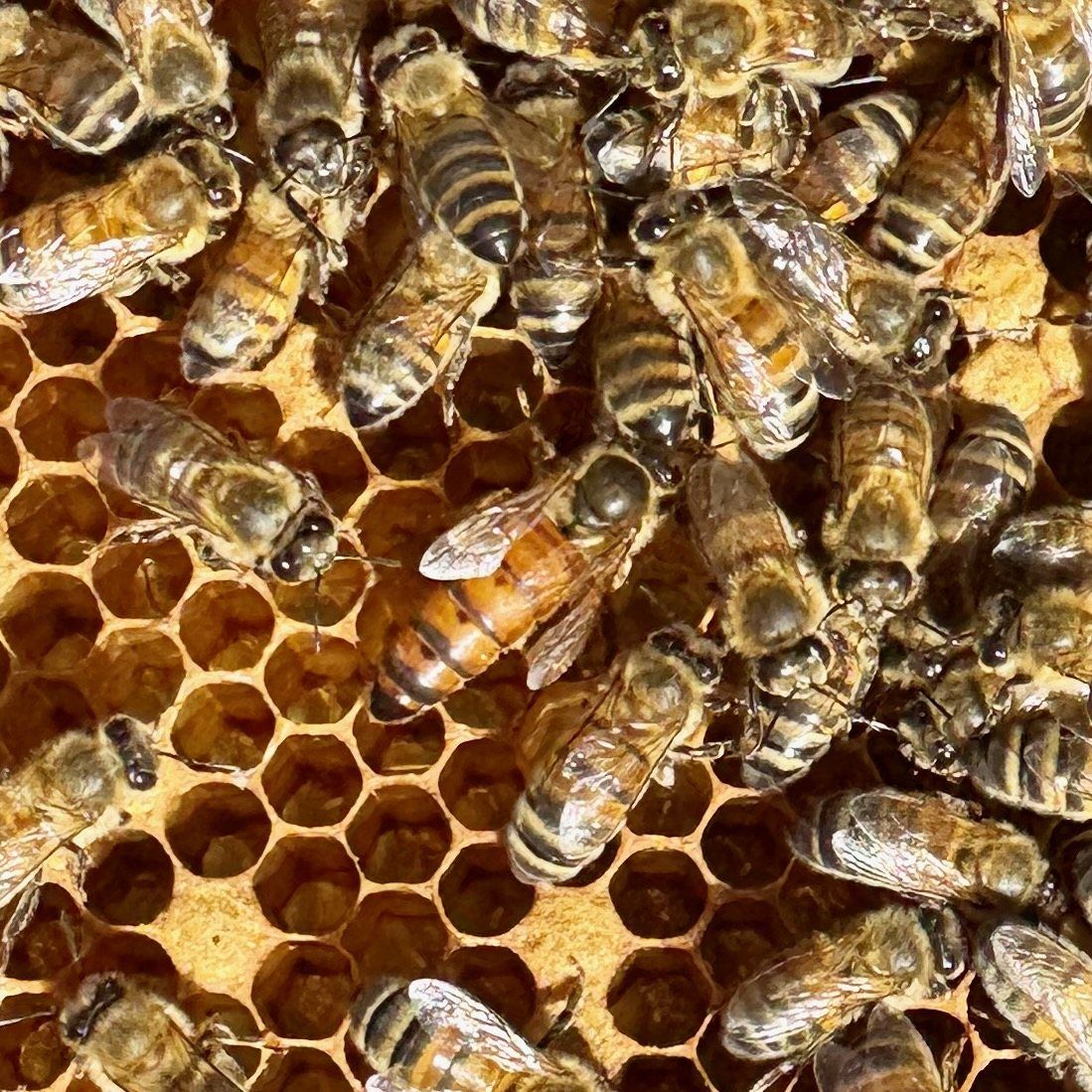
The first question at every inspection is whether there is a queen, or at least eggs. The brood pattern tells you whether she is laying well: solid and with all stages is good; spotty points to a failing queen or a brood disease; drones in worker cells mean a drone layer or laying workers. Stores and frames of bees guide feeding and supering, and queen cells in spring warn of swarming.
Mite counts belong in the same log. The Honey Bee Health Coalition's action threshold is 1 mite per 100 bees in dormancy and spring buildup and 2 per 100 at peak population and in fall, which is 3 or 6 mites in a standard 300-bee wash. Treatments themselves go in the hive treatment records, with their EPA registration numbers.
For what to look for month by month in your region, follow our beekeeping calendar and our guides to swarming and varroa mites.
Where is my data?
In your browser, on this device only. Export a JSON backup to keep it or move it from a phone to a computer, export to CSV for a spreadsheet, and print or save as PDF with the button above.
Frequently asked questions
What should I write down at each hive inspection?
Whether you saw the queen or eggs, the brood pattern, honey and pollen stores, how many frames are covered with bees, queen cells, temper and what you did. Add a mite count at least monthly in the season. Those few notes show at a glance whether a colony is building, failing or about to swarm.
How often should I inspect my hives?
Most often during spring buildup and swarm season, when queen cells can appear between two visits; less often in a summer dearth, when opening hives invites robbing; none once the winter cluster forms. Wait for a calm day over 55 °F (13 °C) with bees flying, the threshold Utah State University Extension uses for a full inspection.
What does a spotty brood pattern mean?
Many empty or mixed cells across a frame of capped brood point to a failing queen, inbreeding, a brood disease such as American or European foulbrood, or heavy varroa. Check capped cells for sunken, greasy or perforated cappings. If you suspect American foulbrood, call your state apiary inspector before moving any equipment.
When should I do a mite count?
The Honey Bee Health Coalition recommends regular monitoring through the season, with the most important counts in late summer, before the colony raises its winter bees. Its action threshold is 1 mite per 100 bees during dormancy and spring buildup, and 2 per 100 at peak population and in fall: 3 or 6 mites in a 300-bee wash.
How do I know if a hive is queenless?
No eggs or young larvae a week or more after the last time you saw them, a loud roar when you open the hive, emergency queen cells on the face of the comb, or laying workers with several eggs per cell. Give a frame of eggs from another hive: if the bees raise queen cells on it, they are queenless.
Is a paper hive record or an online log better?
Whichever you will keep up. This log stays on your device, filters by hive and exports to CSV for a spreadsheet, and you can print it for an apiary inspector. Paper works too; what matters is noting the same things at every visit so you can compare.
Sources
- Tools for Varroa Management, ninth edition (June 2026), Honey Bee Health Coalition
- Beekeeping calendar, Utah State University Extension
- Beekeeping Calendar for the Northeast, Cornell University, CALS Pollinator Network
- Florida Beekeeping Management Calendar (ENY156/IN848), University of Florida, IFAS Extension
- Varroa mite testing and management, University of Minnesota Bee Lab
- Identifying and mitigating foulbrood in honey bee colonies (revised November 2022), Honey Bee Health Coalition
Online logbooks
Hive treatment records
Log varroa treatments with EPA registration numbers, antibiotics under a VFD, mite counts and inspections in a free apiary record you can export and print.
Open the toolHoney extraction log
A honey house log for every batch: lot code, apiary, supers pulled, moisture reading, pounds extracted and jars bottled, so any jar traces back to its hives.
Open the tool